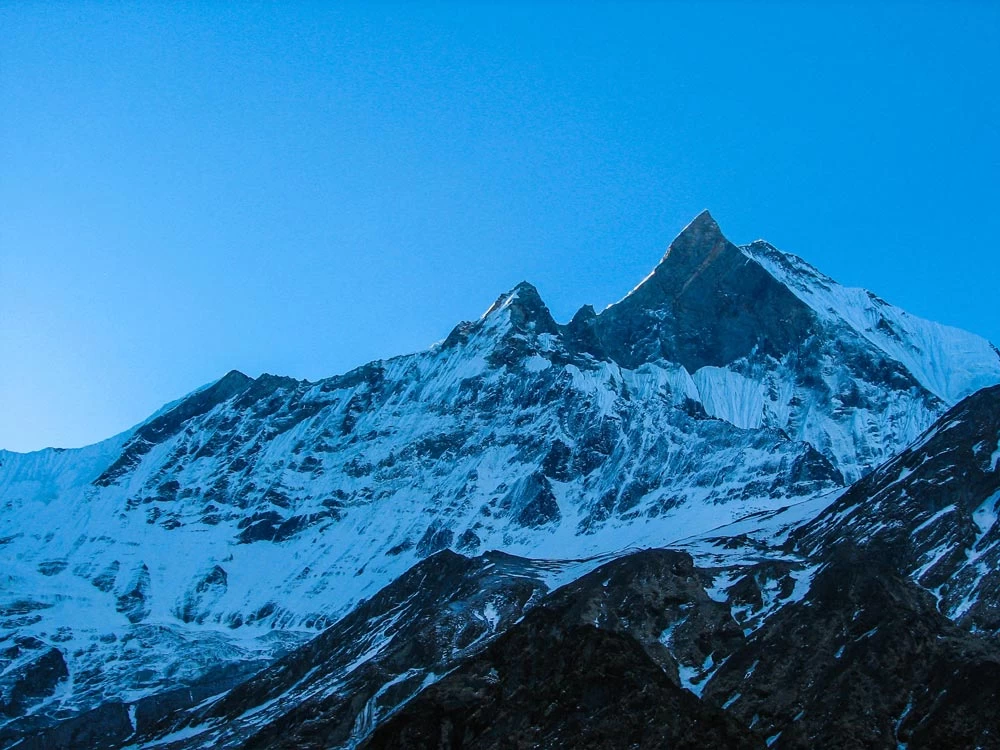
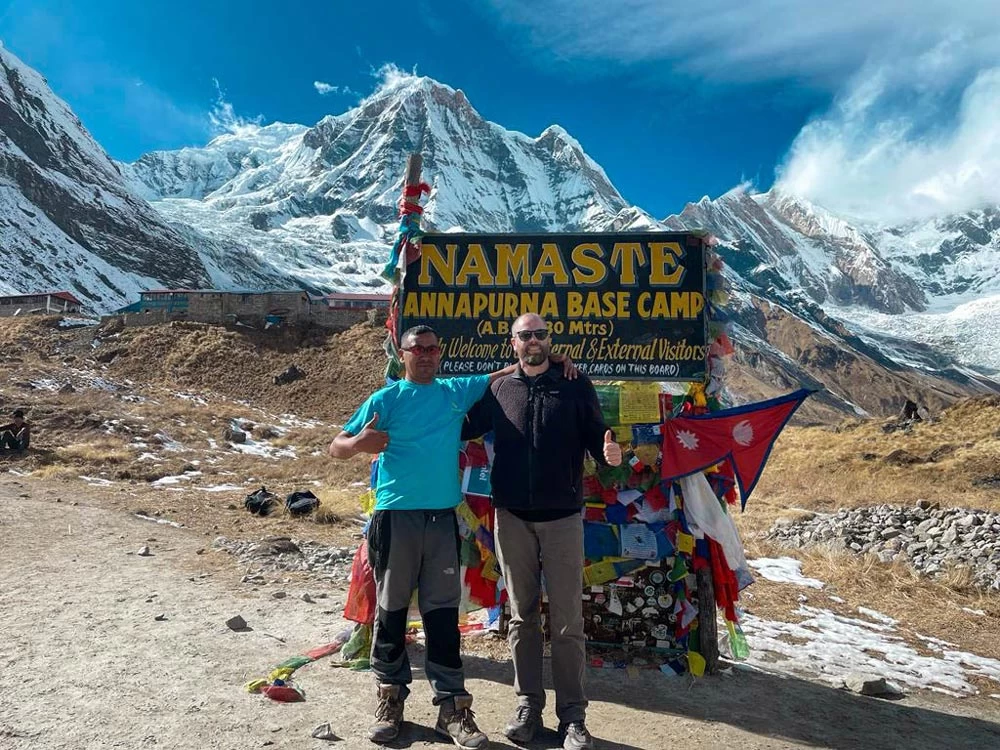
Seasons & Weather
Spring (March–May):
Clear skies, good visibility of peaks
Rhododendron forests in full bloom (stunning)
Daytime warmth, cold nights
Heavy trekker traffic (popular season)
ABC lodges crowded
Autumn (September–November):
Clearest skies of the year
Crisp air, cool nights
Falling leaves (less dramatic than spring colours, but atmospheric)
Local festivals (cultural energy in villages)
Fewer trekkers than in the spring
Best season for this 5-day trek (uncrowded, clear views, temperate)
Summer (June–August):
Monsoon rains daily (afternoon downpours)
Frequent mist and reduced visibility
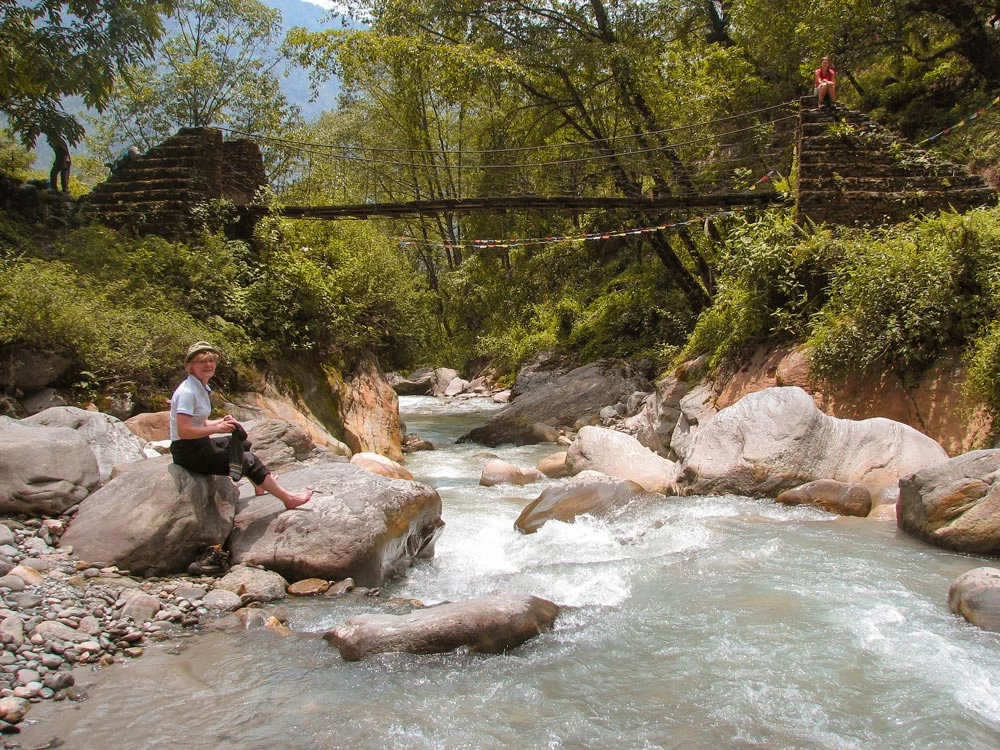
Lush green landscapes
Fewer trekkers
Higher slipping risk on wet trails
Best avoided unless you enjoy rain
Winter (December–February):
Clear skies, cold temperatures
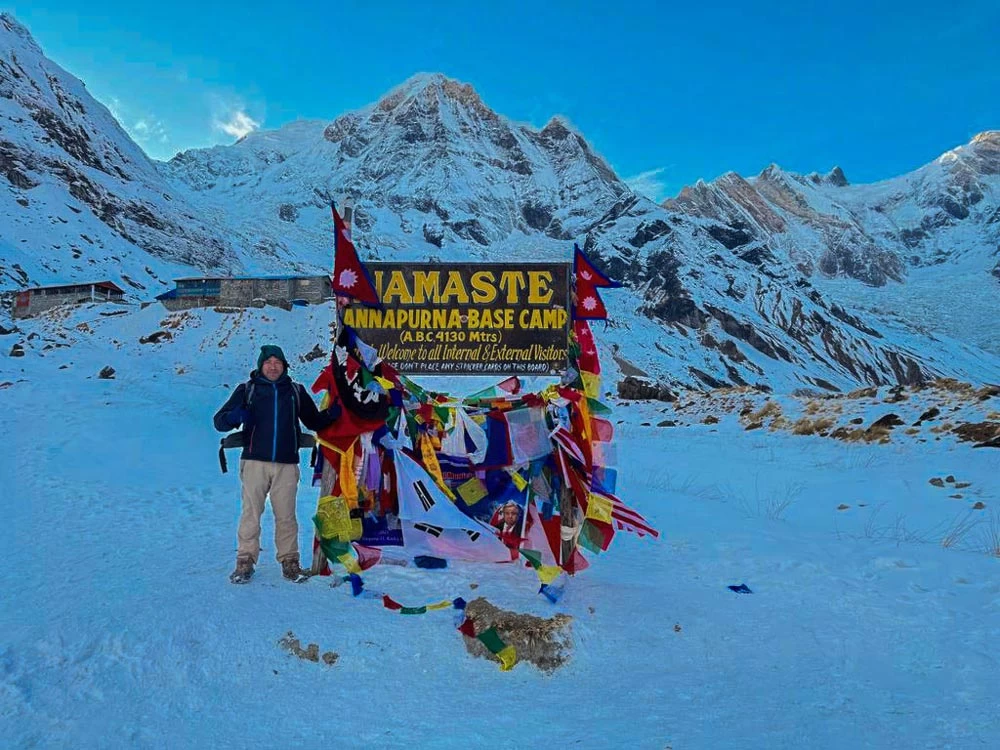
ABC can drop to -10°C at night
Lower trekker numbers
Some lodges close
Beautiful but requires cold-weather gear
Packing & Preparation
What to bring:
Clothing (layering is critical):
Base layers: thermal underwear or merino wool (Days 2–3 are cold)
Mid-layer: fleece or wool sweater
Outer layer: waterproof jacket and pants
Hat, gloves, thick socks (multiple pairs)
Shorts and light t-shirt (for Pokhara and Days 1–2 afternoons)
Footwear:
Good trekking boots (broken in, ankle support)
Trekking socks (merino or wool, not cotton)
Lightweight shoes for lodge evenings
Other essentials:
Trekking poles (reduce knee stress on descent)
Daypack (20L, for water and layers)
Water bottle or hydration bladder (3L capacity)
Headlamp or flashlight
Toiletries (sunscreen critical at altitude, lip balm, blister treatment)
Medications: pain relief, diarrhoea tablets, antihistamine, altitude medication if advised by the doctor
Snacks: energy bars, nuts, dried fruit (lodges have a limited variety)
Optional:
Compression tights or sleeves (help with recovery)
Sleeping bag liner (lodges provide blankets, but these add insulation)
Altimeter watch or app (helps track altitude)
Pre-trek fitness:
You don't need to be an athlete, but basic fitness helps.
Start walking 3–4 weeks before: 1 hour daily, varied terrain
Include hills: stairs, or incline walking
Do strength work: squats, lunges, calf raises (prepare knees for descent)
Build cardiovascular base: 30–40 min moderate cardio, 3x per week
Practice with your loaded daypack (5–8kg) on a long walk
Medical preparation:
See your doctor 4 weeks before. Discuss altitude risk factors (previous AMS, cardiac issues, pregnancy).
Get a fitness clearance if you have any health concerns.
Consider acetazolamide (Diamox) if you have a history. Typical dose: 125mg twice daily, starting day before trek.
Get travel insurance that covers high-altitude trekking.
Bring copies of prescriptions and a basic medical record.
Altitude & Acclimatisation Reality
What you should know:
You're climbing 2,700m in 5 days. That's fast. Most altitude-training experts recommend 300m per day after 2,500m; you're doing ~540m per day on average.
Why you won't get seriously ill:
ABC is 4,130m, not 5,500m. Acute Mountain Sickness (AMS) is rare below 4,000m.
You're only spending one night above 3,200m.
Your guide carries an oximeter and monitors signs (headache, nausea, shortness of breath).
Helicopters are available if emergency evacuation is needed (insurance covers this).
What you'll likely experience:
Day 2: Mild headache, slower breathing, slight fatigue (normal)
Day 3: Headache may worsen or improve depending on hydration and individual response
Night 3 (at ABC): Shallow sleep, vivid dreams, possible brief waking periods (normal)
Day 4: Rapid improvement as you descend (endorphins kick in)
Day 5: Most people feel energised by the descent
Prevention strategy:
Drink 3–4 litres of water daily (guides enforce this)
Eat carbs, not meat (lighter digestion at altitude)
Don't rush the pace (guides adjust for individuals)
Take acetazolamide (Diamox) if you have AMS risk factors (discuss with your doctor before the trek)
Permits & Legal Requirements
What you need:
ACAP (Annapurna Conservation Area Permit) — $30 (included in package price)
TIMS (Trekkers' Information Management System) — $20 (included in package price)
Personal travel insurance (NOT included)
We recommend a minimum of $150–250 for 7 days
Must cover high-altitude trekking (up to 4,000m+)
Must include evacuation coverage
Verify your policy before booking
Important: As of April 2023, Nepal has prohibited solo foreign trekking in designated zones. You must trek with a licensed guide. This package includes a government-licensed guide, so you're covered.
Lodge Standards & Food
What to expect:
Lodges on this route are not luxurious. They're functional mountain guesthouses, which is appropriate to the altitude and location.
Room: Twin beds, wool blankets, basic furniture. Rooms are small but clean. No heaters (altitude = cold). Some lodges have plastic-sheet insulation; it helps marginally.
Bathroom: Shared, basic. Squat or sit toilets. Cold water. Hot showers available for $3–5 per lodge (optional; most people skip them after Day 1).
Dining: Central room with wood stove. Food is communal if group-trekking, or private table if you're a private client. Meals are repetitive but well-prepared: rice, dal, seasonal vegetables, sometimes egg or meat, and tea.
Food philosophy on this trek:
The kitchen sourcing is limited to above 2,500m. Lodges stock supplies weekly. Freshness is better in lower lodges (Sinuwa, Bamboo) than in higher ones. A vegetarian focus is recommended on this trek—lighter digestion at altitude, and meat is inconsistent.
What you'll eat:
Breakfast: Porridge, bread, eggs, pancakes, tea/coffee
Lunch: Dal bhat (rice, lentil soup, seasonal veg), momos, noodles
Dinner: Dal bhat or pasta, sometimes chicken/goat
Between meals: Tea/coffee + local snacks (biscuits, popcorn)
Alcohol: Available but discouraged at altitude. A beer at ABC after Day 3 is a common celebration, but it dehydrates you further. Skip it, or drink one slowly with lots of water.
Guide Assignment & Experience Design
How guide selection works:
You'll be assigned a government-licensed guide with 5+ years' trekking experience. Guides on this route are familiar with the ABC-specific challenges: pace management, altitude monitoring, and timing the ABC arrival for afternoon light.
Your guide will:
Brief you on Day 1 about hydration, pace, and your personal altitude response
Monitor you (discreetly) for AMS signs throughout the trek
Adjust pace if you're struggling
Know the lodges and teahouse owners (he'll communicate preferences for food, hot water, and room placement)
Handle logistics (permit checks, porter coordination, emergency decisions)
How the guide's experience differs
Most guides on this route treat ABC as a checkpoint. HST guides treat ABC as a destination worth understanding, not just a checkpoint to deliver clients to. Your guide will explain why the sanctuary is geologically and culturally significant. He'll point out the sacred nature of Machhapuchhre. He'll discuss local conservation efforts. The goal isn't just delivery to base camp — it's helping you actually arrive there. To the base camp, he'll help you arrive there.
If you want cultural depth (village homestays, monastery visits), discuss this at booking. The standard itinerary can be modified — it requires more time, but a custom version can be arranged.
Customization Options
The standard itinerary works for most people. But if you want to modify it:
Extra acclimatisation day:
Add a rest day at Deurali (Day 2) or ABC (Day 3). Extends trek to 6–7 days.
Cost: +$100–150 per day (additional guide/porter time, lodging).
Private guide + naturalist:
Trek down instead of driving down:
Walk from ABC all the way to Pokhara (adds 1–2 extra days).
Slower pace, deeper village immersion, no jeep ride.
Cost: +$100–150 (extra lodging, meals).
Cultural homestay modifications:
To customise: Email us at [email protected] with your preferences. We'll quote a modified itinerary.
FAQ & Logistics
Internet & Communication:
Your connectivity depends on which lodge you're at and the time of day.
Chhomrong, Himalaya, MBC: WiFi available at main lodges (quality varies; Himalaya and MBC have better signal than Chhomrong). Expect 2–5 Mbps download. Mobile signal (NCell, Ncell) also works—text and WhatsApp are reliable; calls are spotty.
Sinuwa, Deurali: Some lodges have WiFi (ask your guide when you arrive). Mobile signal exists, but weaker. If you need to stay connected, plan to use WhatsApp or messaging apps rather than calls.
ABC: Depends on the lodge. Larger lodges (more beds) may have WiFi or solar charging; smaller ones don't. Mobile signal: sometimes 1–2 bars, sometimes nothing. Assume no connectivity and plan accordingly.
Bottom line: You won't be completely offline, but expect a spotty connection above 3,000m. Don't plan to work remotely or video-call family daily. If you need to check emails urgently, Himalaya or MBC are your best bets.
If you need guaranteed connectivity, let your guide know at booking. Some lodges are more reliable than others.
Is this trek suitable for a first-time trekker?
Not ideal, but possible. The 5-day pace is aggressive—you're gaining 2,700m in 5 days, which is fast acclimatisation. If you've hiked extensively (multi-day backpacking, hill walking), you'll manage. If you've never walked more than 4 hours in a day or slept above 2,500m, start with Poon Hill (3–4 days, max 3,210m). It teaches you how your body responds to altitude without the pressure of a tight schedule.
What's the real altitude sickness risk?
Low, but real. ABC sits at 4,130m—below the threshold where serious AMS typically occurs (5,500m+). Most people experience mild effects (headache, shallow sleep) rather than a dangerous illness.
Who's at higher risk:
Previous AMS history
Rapid ascent from sea level (if you're flying into Kathmandu and trekking 5 days later, you're ascending very fast)
Individual sensitivity (unpredictable; some people acclimatise naturally, others struggle)
Prevention:
- Hydrate obsessively (3–4L daily; your guide will enforce this)
- Eat carbs, not meat (easier digestion at altitude)
- Don't push pace if you're struggling (your guide adjusts)
- Consider acetazolamide (Diamox) if you have risk factors—discuss with your doctor
If you develop serious symptoms (severe headache, confusion, shortness of breath at rest):
- Descend immediately. Don't wait.
- Helicopter evacuation available on-call (~$5,000–8,000; covered by evacuation insurance)
- Your guide carries oxygen and a pulse oximeter (measures blood oxygen saturation)
Reality check: In 3+ years, there have been no serious AMS cases. Headaches? Yes. Evacuations? No.
What if I need to quit mid-trek?
You have options. This isn't a death march.
Early descent: Your guide can arrange it. You'll descend to a lower altitude where you feel better. We refund the unfinished portion pro rata (if you skip Days 4–5, you pay for Days 1–3 only).
Helicopter rescue: If you're genuinely ill or injured and can't walk, helicopters are available. Cost: ~$5,000–8,000 USD. Your personal travel insurance should cover this if you have an evacuation rider (it's essential; we require it).
Rest day: If you're struggling on Day 2 or 3, ask your guide for an extra rest day. This extends the trek by 1–2 days but lets your body adjust. Cost: +$100–150 per extra day.
Important: Tell your guide immediately if something feels wrong. Don't try to tough it out. The mountain will still be there tomorrow.
Can I trek solo?
Yes, but with a licensed guide. Nepal has banned solo foreign trekking in designated zones (including the Annapurna Conservation Area) as of April 2023. You must trek with a licensed guide. This package includes a guide, so you're covered.
Why the rule exists: It's for safety (guides can respond to emergencies) and conservation (regulated group sizes protect the ecosystem).
What's the group dynamic like?
Private groups (1–6 people): You hire a dedicated guide + porters. Your group only. Pace, stops, and experience are customised to you. Lodges might have other trekkers (shared lodge space), but your guide is yours alone.
Shared groups: You share a guide with other small groups (typically 2–4 other people). Same lodges, same stops, but more people. Dinner might be communal. This option is cheaper and often builds camaraderie.
Minimum group size: 2 people. Solo trekkers pay a single supplement ($200) but still trek with a guide (not alone—group will form).
Recommendation: If you're solo and uncertain, join a shared group. You'll meet other trekkers, share stories, and the guide handles everything. Less lonely than you'd think.
How fit do I need to be?
Basic fitness is enough. You don't need to run marathons.
Before the trek:
- Walk 1 hour daily for 3–4 weeks (mix of flat and hills)
- Do strength work 2x per week: squats, lunges, calf raises (prepare your quads and knees for descent)
- One long walk (2–3 hours) the week before to test your knees and stamina
During the trek:
- Your guide sets the pace. It's not a race.
- Walking poles reduce strain on knees by 25%. Use them on descent (Day 4–5).
- If you need to rest, rest. No judgment.
Common misconception: You don't need to be "fit for Everest." ABC is a walk. A long, high walk, but a walk. The hardest part is mental (pushing through Day 2 headache) and physical endurance (5+ hours of continuous walking), not technical climbing.
What should I eat before/after the trek?
Before (2 weeks prior):
- Eat normal food. Carbs, protein, and vegetables. No special diet.
- Stay hydrated (baseline: drink more water than you think you need).
- Avoid heavy alcohol or drug use (doesn't help acclimatisation).
During the trek:
- Breakfast: carbs (porridge, bread, rice) + tea/coffee
- Lunch: dal bhat (rice + lentil soup) or noodles
- Dinner: same as lunch
- Between meals: tea, snacks, water
- Stick to vegetarian food (lighter digestion; meat is inconsistent at altitude)
- Avoid alcohol (dehydrates you; one beer at ABC is fine, but skip regular drinking)
After the trek:
- Your body will be depleted. Eat well for 3–5 days.
- Iron-rich food (red meat, beans) helps if you're fatigued
- Protein and carbs help muscles recover
- Sleep 8–10 hours if possible
How do I get to Pokhara from Kathmandu?
Option 1: Bus (Cheapest)
Tourist bus from Kathmandu to Pokhara: 6–7 hours, $5–10
Departs morning, arrives evening. Scenic but bumpy.
Book at your hotel or on the street (tourist operators are everywhere)
Option 2: Private jeep/car (Most comfortable)
We can arrange: $60–80 for 1–3 people
6 hours, air-conditioned, driver knows the road
Book when you confirm your trek
Option 3: Domestic flight (Fastest)
Kathmandu to Pokhara: 25 minutes, ~$127 one-way
Departs mid-morning, arrives 10 AM
Book through airlines (Yeti, Buddha, Himalaya) or travel agents
The weather can cause delays in the monsoon season
Recommendation: If you arrive in Kathmandu groggy from international travel, take the flight. The extra $80 is worth not sitting on a bus for 6 hours. If you have time and want the scenic route (hills, villages), take the bus.
We'll arrange your Kathmandu–Pokhara transfer if you book early. Email [email protected] with your flight details.
What currency do I use? Can I use cards?
Currency: Nepalese Rupee (NPR). 1 USD ≈ 132 NPR (rates fluctuate).
ATMs: Available in Pokhara and Kathmandu. Get cash before you trek (no ATMs on the trail).
Credit cards: Pokhara hotels accept cards. Lodges on the trek don't. Bring cash for tips, any extra purchases, or emergencies.
Exchange rate: Better at banks/ATMs than at airports or hotel counters.
Do I need vaccinations or medications?
Vaccinations: Consult your doctor 4 weeks before travel. Common recommendations:
Medications to bring:
Pain relief (ibuprofen, paracetamol)
Diarrhoea treatment (Imodium, Ciprofloxacin)
Antihistamine (for altitude headache or allergies)
Blister treatment (Compeed patches)
Altitude medication: Acetazolamide (Diamox, 125mg) if your doctor recommends
Any personal medications (insulin, inhalers, etc.)
Water safety: Drink bottled water (available at lodges) or use purification tablets. Don't drink tap water.
What's the payment schedule?
Deposit: 30% of total cost to confirm booking (e.g., $150 for a $499 trek)
Balance: 70% due 2 weeks before trek start
Payment methods: Bank transfer (preferred), credit card (3% fee), or PayPal.
What's your cancellation policy?
Cancellation 60+ days before: Full refund minus deposit
Cancellation 15–59 days before: 50% refund
Cancellation <14 days before: No refund (we'll try to reschedule you to another date)
No-show (don't arrive): No refund
We cancel due to weather/emergency: Full refund or reschedule to another date
Trip insurance: Buy it separately. It covers cancellations due to illness, family emergencies, flight delays, etc. We recommend World Nomads or SafetyWing (~$150 for 7 days).
.webp)